Foster Care Registry: What to Put on One and How

A foster care registry is a gift list that a foster carer shares with friends and family, so they can buy what a child arriving in their home will need. The tricky part is that you often don’t know the child’s age, size or gender in advance. The best list is therefore built from flexible basics, a few comfort items and clear notes, and it can pull gifts from any shop into one place with a single link.
If you landed here looking for an official register of fostered or adopted people, that is a different thing. We cover the difference below, then get into the practical list.
Key Takeaways
A foster care registry is a wish list of practical items, not an official record. It helps people who want to support a foster carer.
Choose versatile items: neutral colours, adjustable sizes and things that work across age ranges.
Buy safety-critical gear such as car seats new, and keep comfort items small and personal.
Use notes on each item to say what size, quantity or type would actually help.
One list that accepts gifts from any shop saves you from managing several registries.
Foster care registry: a gift list, not an official register
The phrase has two meanings, and the search results mostly show the official one. Official registers exist to help separated relatives find each other. In England and Wales, the Adoption Contact Register does this for adopted adults and birth relatives. In the United States, the District of Columbia runs a Voluntary Foster Care Registry, which lets current and former foster youth and their immediate birth family members enrol so the local child welfare agency can tell them how to contact each other. It does not search for people.
A foster care registry in the gift sense is something else entirely. It is an ordinary wish list, set up by a foster carer or by a friend or relative on their behalf. Its job is to turn “what can I do to help?” into specific, buyable answers.
Why a foster registry differs from a standard baby registry
A typical baby registry is built around a due date. Everything is predictable: a newborn, a known season, nine months of preparation. Fostering rarely works that way.
Short notice. A placement can begin with very little planning time.
Unknown age and size. You may be approved for a particular age range, but within it the child could be a baby or a school-age child.
Few belongings. The Georgia Foster Parent Manual, an official state guide, says a child often arrives with few or no personal belongings, so it can help to have items ready. It also advises keeping in mind the age range and sex of the child you are approved to care for. You can read it in the Georgia Foster Parent Manual.
Items may move on. A child’s belongings go with them, so you may restock for the next placement.
That last point shapes the whole list. You are not furnishing one nursery. You are building a ready stock.
What to put on a foster care registry
The manual’s list of items worth having to hand is a good backbone. It includes toiletries such as toothbrushes, hair care items such as brushes and combs, nappies and undergarments, sleepwear, night lights, a few comforting toys and books, child-friendly snacks and drinks, and a special blanket, pillow or soft toy. Here is how to turn that into a registry.
Everyday basics that fit many ages
Pyjamas and sleepwear in a few sizes within your approved age range
Undergarments and socks
Toothbrushes, hairbrushes, combs and simple toiletries
Nappies and wipes in a spread of sizes, if you are approved for babies and toddlers (a few of each size, not a full box of one)
Towels and flannels in plain colours
Not sure what size to pick for a baby? A guide to choosing newborn bodysuit sizes can help you decide how many to list and in which sizes, since newborn sizes run small and babies outgrow them quickly.
Comfort items that help a child settle
A child arriving in an unfamiliar home may find a small, soft thing reassuring. Add a night light, a couple of picture books, a soft toy and a blanket the child can keep. Keep this section short. A few well-chosen items beat a heap, and the child may bring their own treasured things.
Safety gear you should buy new
If you are caring for babies or toddlers, a car seat and a cot or bed are where you should not improvise. One adoption checklist advises against relying on hand-me-down car seats and cots because they may not be safe to reuse, and suggests registering for new gear that meets current safety standards. See the adoptive parents’ registry checklist. Check the standard and fitting instructions for your own seat and child before use.
Gift cards and contributions
Because sizes are uncertain, a gift card for a children’s clothing shop or a contribution towards a larger item lets you buy exactly the right thing once a child arrives. List one or two of these alongside the physical items.
How to build the registry, step by step
Decide your age range. Write down the ages you are approved for. This drives every size choice.
Sort by daily job. Sleep, washing, dressing, travelling, eating, comfort. If a job is covered, don’t list it.
Pick versatile versions. Neutral colours, adjustable fits and items that work across ages. Skip anything highly specific to one child.
Add notes. Tell guests what helps: “size 3 to 5 years”, “two sets only”, “plain colours please”. Notes also prevent unsuitable duplicates.
Set quantities. Ask for one or two of an item rather than ten, so you can adapt as placements change.
Mix price points. Include small items for a colleague who wants to spend a little, and bigger ones for a family group.
Share one link. Send it to friends, family and colleagues, and update it after each placement.
This is where a universal registry earns its place. Stores differ in what they stock for different ages, and a single shop rarely has the toothbrush, the pyjamas and the night light you want. With a registry that takes a link from any store, you paste each product address into one list instead of splitting your wishes across several shop-specific registries. You can see what has been bought and by whom, which makes thank-yous easy.
Fitting the list to your family situation
People searching this topic often have a particular household in mind. The same method adapts.
First-time carers. You may feel you need everything. Start with the basics above and let the list grow once you know your first placement.
Working carers. Duplicate essentials, such as a spare set of sleepwear and comfort items, make hand-overs to nursery or school easier. Add meal delivery gift cards if friends want to help with time rather than things.
Single carers. Use notes generously to explain what would genuinely help, and favour items that save time on busy days.
Grandparents and friends. If you are buying, ask the carer whether they would prefer help with a larger item or a few small ones. Following the list is the safest route, and for safety-related items, always ask first.
Gender-neutral choices. Because you may not know in advance, plain colours and simple designs let one item serve any child.
A baby sprinkle, a smaller and more informal gathering than a baby shower, suits fostering well. It is often less formal, and a shared registry link does the work of a gift table.
Etiquette: how to share without awkwardness
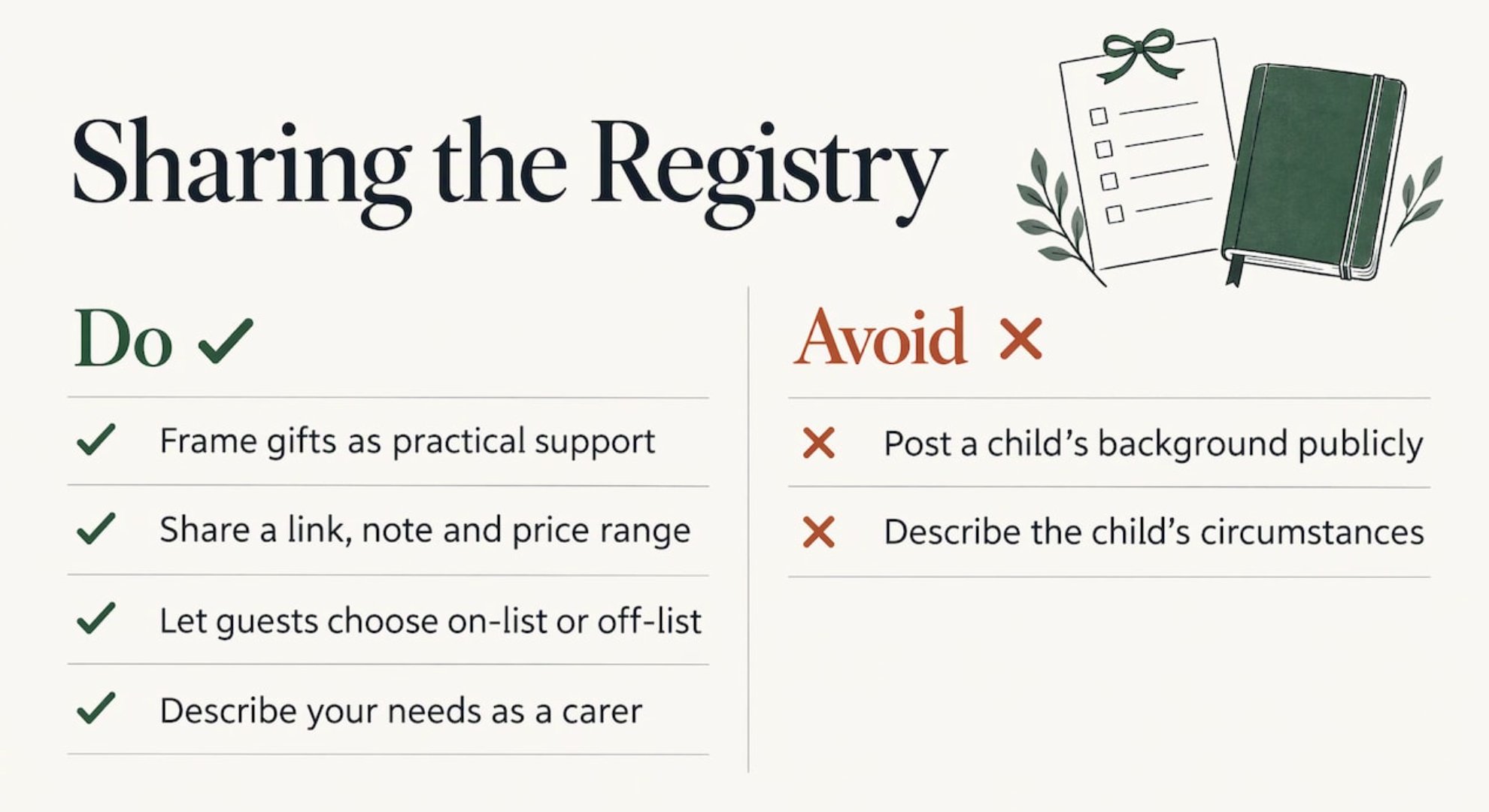
A foster carer asking for gifts can feel uncomfortable. Two things help. First, frame the list as practical support for children who may arrive with little, which is what it is. Second, make it easy for people to say yes: a link, a short note and a range of prices. Let guests choose from the list or give something off it, since many thoughtful gifts are welcome either way. Keep a child’s privacy in mind. Don’t post details about a child’s background or situation on a public list. The list should describe your needs as a carer, not the child’s circumstances.
Our view: one list beats several
Foster families tend to be the people who most need a registry to be flexible, and the least time to manage one. A wedding list can sit still for months. A foster list changes the moment a placement does.
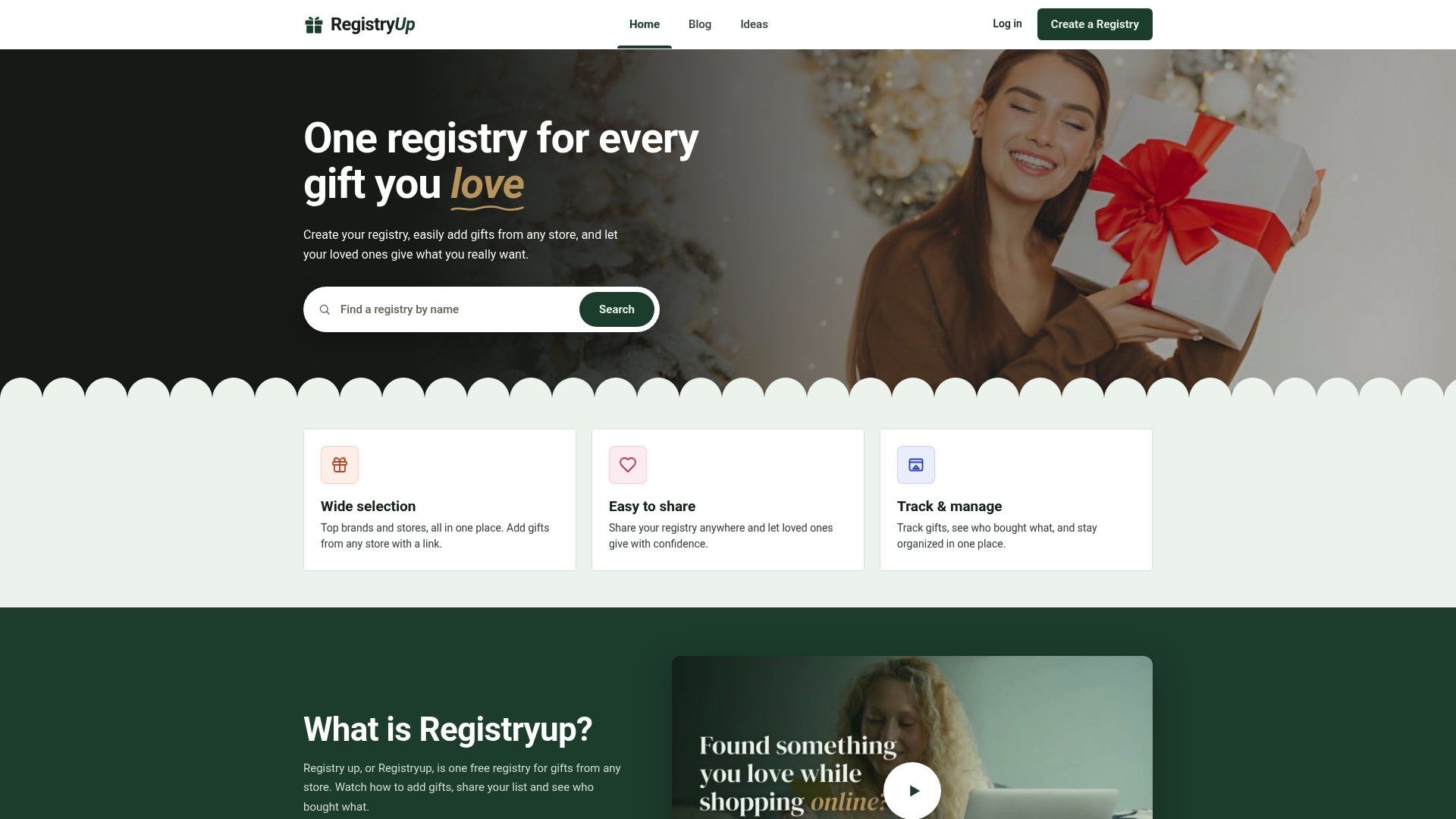
That is why we built Registryup around a simple idea: you add a gift from any online shop by pasting its link, or by using the browser extension, and everything lives in one list. You can track which gifts have been bought and see who bought them, then share the registry with a single link. There are no fees or markups for the person creating the registry or for the people buying.
Our advice is to keep the list small, specific and easy to edit. Write a note on each item. Update it when your circumstances change. A good registry is a conversation with the people who want to help, and the notes are how you hold it.
Start your registry
We built Registryup so you can put every item, from any shop, on one list and share it with one link. It is free to use, and you can track what has been bought as gifts arrive. Create yours on the Registryup universal gift registry.
If you want ideas for what to add, our baby registry gift ideas cover everyday items for new arrivals, and the baby shower registry ideas page suits a smaller celebration.
FAQ
Is a foster care registry the same as an official foster care register?
No. Official registers, such as the Adoption Contact Register in England and Wales, help separated family members find one another. A foster care registry in the gift sense is a wish list that friends and family can buy from to support a foster carer.
What should a foster parent register for if they don’t know the child’s age?
Choose versatile basics: sleepwear, toiletries, towels, a night light, books and a soft toy, in plain colours. Add a gift card or contribution fund so you can buy the right sizes once a child arrives.
Should I register for a car seat and cot?
If you care for babies or toddlers, yes, and buy them new rather than second-hand, because older gear may not meet current safety standards. Check that the seat suits your child’s size and your car before use.
Can I use one registry for items from different shops?
Yes. A universal registry lets you add products from any online shop by pasting a link, so you keep everything in one list and one shareable address instead of several shop-specific ones.
Share